Showing posts with label WW. Show all posts

Monday, May 28, 2012

Vastly Different Worlds (WW114 - Season One Finale!)

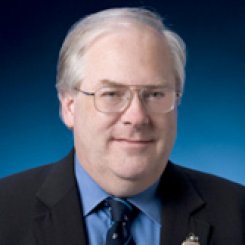
Season One of Western Worlds clues up tonight with my interview of Dr. Jaymie Matthews (pictured above) of the University of British Columbia. We'll be back on Monday, July 30th for Season Two, starting off with a discussion of the Mars Science Laboratory.

In his work as an anthropologist, the famed scientist Jared Diamond is known to express his fondness for the idea of a "natural experiment." What he means by this is that some systems are so large and complex and the ramifications of changing variables so severe that it would be impossible to simulate these systems in the laboratory or the real world. So, instead, what we do is to look at the world around us and its history. For significant events, if we can determine their proximate and ultimate causes and understand the variables in play we can understand the relationship between cause and effect. For instance, we don't need to go out and remove all the trees from an island to understand what deforestation does to the culture living there - the history of Easter Island tells us this.

Similarly, in Astronomy we are lucky that there are examples of just about every structure that exists both today and, through the finite speed of light, in the past. We didn't have to reconstruct the positions of all the near stars to understand what a galaxy looks like from all angles, there are examples of every type in every orientation out there, just waiting to be observed. And we understand the life-cycle of stars from birth to death even though the process requires more time than life has been on Earth because we can see examples of every stage out there.

Similarly, we can use Exoplanets to tell us what our own solar system and our own planet would be like were the conditions a little bit different. Earlier this year we heard from Nikku Madhusudhan about what might happen if Carbon exceeded Oxygen in abundance. This episode, we explore the full gamut of possibilities from planets both nearer and further from their parent stars than we, some with highly eccentric orbits that give them phenomenal seasons. This tells us about climate in general and its ability to regulate planetary temperature and weather. For that reason, this episode is entitled "Vastly Different Worlds." And like what we have learned from studying the clouds on Jupiter and, yes, the dunes on Mars, it can improve our understanding of our own planet and the processes that affect the world we experience.

It's a great way to cap off our season! And like the interview with David Southwood, there's a little something for everyone in the work of Dr. Matthews. As usual, my on-air intro is under the cut. After you listen to this episode, be sure to head on over to our Survey and help to pick out what episodes we'll air over the summer. Have a great couple of months and don't forget to make World Enough and Time for us again the week before Curiosity lands on Mars 10 PM EDT on Monday, July 30!

Tuesday, May 22, 2012

Vote for your favourite episodes!

Next week is the season one finale of Western Worlds! We're taking a break until July 30 when season 2 begins. But until then we'd like to know what episodes you liked best and which ones you would like to hear rerun over the break. To vote for your favourites, click on the link below:


Thanks again for listening and I'm looking forward to season two.

Monday, May 21, 2012

Practice makes Perfect (WW113)


Dr. Dean Eppler, space suit expert and 2011 Science Lead for the NASA Desert RATS Team sat down with our own Marianne Mader at LPSC this year and you'll have the chance to hear that interview later on tonight. Much of what they talked about focused on something called "Analogue Missions" which are practice space missions completed on Earth. Why would you want to hold such an exercise? Well, for one thing it's much cheaper to conduct a space mission on the Earth and much safer for the astronauts. That means that you can try lots of different tools and techniques to figure out what works and what doesn't.


This is important because astronaut time is extraordinarily valuable. Say you could design, build and deliver a capable lunar rover for ~$1b and that the median expected lifetime on the lunar surface was something like 5 years. With 8 hours of ops per day (average), that gives us an hourly cost of something like $100k/hour. However, a mission to the moon for two weeks (~70 hrs EVA) might cost something like ~$10b/astronaut. So that's about $100m/hour for humans. If we assume a Phoenix-like multiplier, i.e. that 152 sols of operations could have been conducted in a couple of hours by humans, you get that human time is ~600 times more productive than is robot time. Call it an even 1000 times. Thus, the cost per datum gathered is about the same, but an hour of human time wasted is equivalent to over four months of robot time wasted, so even a small cost in human time is extremely expensive. Worse, you loose the contemplation time that robots give you to convince yourself and the rest of the science team that you are making the correct decisions.


One of the focuses for D-RATS is to find ways to make that human time more productive through innovative use of technology. Often they test combinations of different tools, rovers and humans working cooperatively and so on. It's a challenging problem on many levels and D-RATS aren't the only team trying to improve our knowledge here. We've done a couple of analogue missions here at Western for the CSA which I am proud to say I've been a part of as a Co-Investigator (and have written about before in this space). You can read more about our activities at our "Anablog" and our first paper discussing how we ran mission control can be found here. If you're in the D.C. Area, why not go and listen to WW Co-Host Raymond Francis talk a little bit about how rovers and humans interacted at the GLEX Conference?


Want to know more? My intro is under the cut and don't forget to tune into Western Worlds on Astronomy.fm at 10PM tonight after 365 Days of Astronomy and the News.

Wednesday, May 16, 2012

Swords into Plowshares (WW112)

Ralph Mcnutt 

Ralph McNutt (pictured above) has had a long and successful career working as a scientist on a great many missions from Voyager through Cassini to New Horizons and his current role as project scientist for Mercury Messenger. Like previous guest David Southwood, his specialty is space physics, a field with broad applicability across the solar system.

However, when Dr. McNutt spoke with our co-host Raymond Francis at this year's LPSC, it was on a different, yet no less important topic. What Voyager, Cassini and New Horizons have in common is a reliance on nuclear power to provide electricity to their computers, scientific instruments and onboard systems. You just can't do deep space exploration without these nuclear batteries, powered by Plutonium 238. However, production of Pu-238 stopped many years ago in the United States and current stocks to run spacecraft have been purchased from the Russians.

However, the lack of Pu-238 is starting to approach crisis levels. This is an issue that the DPS has spoken out strongly about for several years. As such, the US Congress has sought ways to restart the production of this material domestically for spacecraft usage. Unfortunately, agreements between the DoE and NASA have kept falling through. For many years the language Authorizing NASA to restart production was set-out in law, but no money was Appropriated for that purpose (The US has a two-stage budget process in which not everything an agency is legally permitted to do is actually funded). This year, it looks like things might be changing with NASA expected to receive approximately $15 million for plutonium restart in the president's budget request.

In the meantime, the plutonium shortage has helped spur the interest of engineers to try to improve the efficiency of Nuclear Batteries. Interestingly, the decay energy of Pu-238 goes almost entirely into creating heat which means that they are particularly helpful when thermal energy is what is ultimately desired. But the main problem is that by moving around heat to keep components warm, or to increase the efficiency (such as with a sterling cycle) you introduce moving parts with non-infinite duty cycles. Just like the human heart, all such components will ultimately stop beating, bringing the missions they power to an end.

We don't always focus on the technical aspects here at WW, but this episode is a fascinating study of a critical technology for space exploration and is not to be missed. You can find a copy of the episode here and, as usual, my intro is under the cut.

Monday, May 7, 2012

Diamonds on the Blackest Velvet (WW111)


Tonight's guest on WW is Nikku Madhusudhan (shown above in a photo by Beverly Schaefer) as we return once more to the topic of extrasolar planets. It's a fascinating field that has grown in leaps and bounds since the first planets were observed around pulsars in the ealy 1990s and around a main sequence star in 1995. Since that time our techniques have expanded and the variety of planetary systems is added to almost daily.

Astoundingly, we can now deduce details about the atmospheres of some of these extrasolar planets, but only the ones relatively large and relatively close-in around brighter stars. But even in this small subset of the infamous "hot jupiters" there is amazing variety. A good part of Dr. Madhusudhan's fame comes from confirming the existence of planets for which Carbon is more abundant than oxygen. Such places were long theorized to exist because Oxygen and Carbon are produced in similar quantities by the proceses in stars that create elements heavier than hydrogen. This "nucleosynthesis" produces a characteristic pattern that we can observe in the abundances of elements within our own solar system (from wikipedia and shown below):


Take a close look. You'll notice a few things. First, the elements created in the big bang, Hydrogen and Helium Dominate - we have not yet come close to processing all of the material in the universe through stars. Secondly, you'll notice the stair-step pattern favoring even-numbered elements. This comes from the relative ease of building up heavier nucleii from "alpha particles," helium-2 nucleii and the greater stability of the nucleii thus formed. But the abundances fall off as the atomic number increases because it gets harder and harder to form larger and larger nucleii since more energy is required. In particular, beyond Iron, nuclear fusion does not yeild any energy, and so you get a pile-up that allows Iron to stand up above the pack.

What about Carbon and Oxygen? Well, these are synthesized largely through an efficient nuclear fusion process called the CNO-cycle in stars a bit more massive than the sun and up. Depending on the specific circumstances of the stellar furnace in question, either one of Carbon or Oxygen can come out a bit ahead. In the building of our own solar system, it was Oxygen. And so we have a solar system whose solids are composed mainly of ices (H2O) and silicate-bearing rocks (SiO4). By weight, Oxygen is not just a significant part of our atmosphere but comprises nearly 60% of the Earth's solid matter too.

Had the balance been different, a system of carbon compounds with different properties would have resulted. By showing that such systems do, in fact, exist Dr. Madhusudhan has expanded our view of the universe and the kinds of variety that exists out there. I hope you enjoy listening to his interview as much as I did. As always, a transcript of my intro is under the cut.

Monday, April 30, 2012

Tempted by the Fates (WW110)

Dr. Catherine Neish stands atop one of the Kelso Dunes in the Mohave Dessert, California. Check out her website to learn more about her publications, activities and to view a slideshow of Catherine in front of things geologic.

We come now to our tenth episode. For those of you who think in astronomical terms, that means that we have increased our repertoire by an order of magnitude since our first presentation! For our tenth, we introduce a new interviewer to the mix - Marianne Mader. Her choice of interview subject is one whom I know well. My office mate for nearly four years at the University of Arizona and Titan expert, Dr. Catherine Neish of APL at Johns Hopkins. Those regular readers of this blog will know that nearly two years ago, I interviewed Dr. Neish for our sister program "York Universe." Luckily for us, she has always had time to speak to us and to you about the goings on out at Titan and close to home with our Moon.

In that respect, Dr. Neish is somewhat unique, someone who works across the solar system, but mainly on satellites instead of their primaries. However, Titan is large enough that it can be considered a world in its own right and in many ways is as interesting if not more so than some full-fledged planetary bodies. I've always been impressed by Dr. Neish's ability to make a lasting contribution no matter where she goes and you can include our analogue space missions here at Western University in that mix. Last summer, she was an integral member of Mission Control.

The ILSR Analogue Team relaxes at the Grad Club following the successful completion of week one of operations. Your humble narrator is located at the end of the table, clutching a green concoction. Catherine is at right (my left). Incidentally, WW Co-Host Raymond Francis can be seen at my right and Marianne Mader is second from the right.

As usual, my introduction can be found beneath the cut.

Sunday, April 22, 2012

Across the Disc of Crimson (WW109)


Dave McCarter of the London Chapter of the RASC (pictured above) will be our guide this week on Western Worlds. Co-host Alyssa Gilbert spoke to him about the real star of the show, seen below!


The 2004 Venus transit as photographed in Hong Kong by Wikipedia user Mswggpai.

The transit isn't to be missed - there won't be another one for over a century, so if you're located in an area that will have a view, be sure to take it in. While I should point out that you should never look directly at the sun without serious protection for your eyes, if you do have a pair of welder's glasses, you should be able to see the spot that is Venus with the naked eye. To find out if you'll be in line to take a look, find a map below courtesy of Fred Espenak of the Goddard Space Flight Centre via Wikipedia, once more:


If you're not in the light toned areas, why not consider a trip overseas? If you do decide to take in this astronomical sight, arid locations are especially helpful. In 2004 Dave caught the transit on the island of crete and once again he will be close to the centre of the transit window on the big island of Hawai'i on the summit of Mauna Kea. Listen to our interview to hear some of Dave's tips or look below the cut for Alyssa's guide to ressources on the transit and my introduction!

Tuesday, April 17, 2012

Upon a Peak in Darien (WW108)


Our guest on WW this week was David Southwood. He and I both had the joy of working on the Huygens probe in 2005. Of course, our participation on that project was at very different levels - he as senior project leadership with ESA for many years, myself as a graduate student in the US contingent of the DISR Instrument. I was probably amongst the most johnny-come-lately participants, having started in 2004 on a project that had existed in one form or another since 1972.

I mention Huygens because Professor Southwood lists that mission amongst the highlights of his career. However, he has participated in more scientific projects, space missions and scientific endeavors and has won more awards and accolades than I can possibly list in this space. To give you a flavour, he has worked on missions to every classical planet in the solar system and astronomical projects beyond it, was part of the magnetometer team that discovered evidence of liquid water on Europa, led the Cassini Magnetometer Team and has contributed greatly to the study of space weather.

I was extremely fortunate to get the chance to speak with Professor Southwood as he was in Toronto a few weeks ago to give the annual J. Tuzo Wilson lecture at the University of Toronto. I also need to thank his host, Dr. Nigel Edwards (a former prof of mine, back in my undergraduate days) for fitting WW into his and David's schedule at the last possible moment. We and our listeners appreciate your flexibility and accommodation!

What makes this interview one of my favourites is that Professor Southwood really epitomizes what we are trying to do here on Western Worlds. Not only do we want to share the Science of other worlds with you, but also how we get there (Engineering/Space Technology) how the decisions about where to fly get made (Space Agency/Space Politics) and how all of that comes back around to you, our listeners (Education/Public Outreach).  Professor Southwood has led a hybrid career that has combined the best of all of these worlds, and I for one, will take his advice to heart. If I can achieve in my own career even a few percent of what he has been able to do in his, I will count it a resounding success.

If you missed our broadcast, fear not! You can download a copy of Professor Southwood's interview from the WW webpage here. As usual, my introduction is under the cut.

Monday, April 9, 2012

Explorers in the Old Fashioned Sense (WW107)


(Above) Roger stands next to a mock-up of the MSL Rover "Curiosity" The mast "head" which contains the LIBS aperture is up and to the right of Roger.
(Below) The ChemCam instrument in the lab. The LIBS aperture is to the right.

Arguably, the Planetary Science Event of the Year (TM) is going to be the landing of Curiosity on Mars on August the 5th. Tonight we have an interview with the leader of one of the instrument teams - Dr. Roger Wiens of the Los Alamos National Laboratory. Dr. Wiens leads the ChemCam instrument which includes the infamous LIBS laser (that cyclops eye on top of the rover's mast). I'm hoping to use this instrument extensively to perform atmospheric sensing work so I know I will be talking a great deal with Dr. Wiens over the months and years which follow.

Since my introduction goes into detail about the rover, I'll leave it there for today. As usual, you can find that introduction under the cut.


Wednesday, April 4, 2012

The Landscape in the Sky (WW106)


This Monday past marks the first interview of Parshati Patel, as she becomes the fourth member of the WW crew to try her hand at interviewing! She certainly couldn't have picked a better subject then Dr. Travis Barman (pictured above) of the Lowell Observatory and the results speak for themselves. If you haven't had the chance to listen, drop by the WW page and pick up a copy of the interview!

The solar system has, for a long time, been our own backyard to astronomers - out beyond our home but not as exotic or enticing as that which lies beyond. But, exo-planets are an interesting cutting-edge convergence of Planetary Science and mainstream Astronomy each of which counts this field as their own. It's a productive rivalry with "Planetary Science" missions like Kepler, a space mission currently conducting a planetary census, coordinating with "Astrophysics" telescopes on the ground to confirm discoveries of new worlds. The statistical results then get put into models, such as those of the Nice group, that help to tell us why our own solar system looks the way it does today. By understanding the initial conditions required to make our solar system "work" and how ours differs from others, we can get a handle on the process more generally.

It's a fascinating study and the explosion in planets over the last decade is nothing less than breath-taking. The expansion in techniques is no less so. While it may be awhile before we get to see them up close and know them the way we do our own solar system, Dr. Barman's direct images of exoplanets far from their parent stars brings to mind what Uranus and Neptune might have looked like a century ago. Who knows what the future in this fast-breaking field will bring? I hope you enjoy the episode, and, as always, my introduction is underneath the cut.


Thursday, March 29, 2012

Hazardous Journey (WW105)


This week's guest, Melissa Battler, was our CAPCOM on the Barringer Lunar Analogue Mission (BLAM). As the main link to the astronauts in the field she fulfilled a vital role and one very much appreciated by myself as the Flight Director (FD).  You can see a photo taken from that mission above in which Melissa is wearing her trademark headset (top) and below at her station, situated right next to the FD.

Some might be tempted to wonder, why have a single person dedicated to speaking with the astronauts at all? Why can't the flight director or Mission Control as a whole just speak to the astronauts? Well there are a couple of reasons. First, it makes sense for there to be a single point of contact with the astronauts, someone with whom they can build up a rapport. That way, they always know information is coming to them through a single channel - this removes the potential for conflicting instructions. Secondly, mission control can be a bit of a crazy place, even with the FD directing traffic, and it takes a special skill set to be able to filter through all the information passing back and forth. A stellar short term memory and an ability to understand what directives are simply proposed and which have been decided is definitely a requirement. I stepped in when Melissa had to leave the room and I can tell you - her job was not an easy one!

There is another more subtle reason that the CAPCOM role exists, by having a person dedicated to communicating with the Astronauts, they gain an advocate at Mission Control. It is for that reason that CAPCOMs are typically current or former astronauts themselves. They can put themselves in the shoes of the astronauts who, in turn, know that the CAPCOM understands their plight. Melissa was an excellent candidate to fulfil that role precisely because she has had so much experience simulating Mars missions in the past. That exploration is part of what makes her interview with Alyssa Gilbert so memorable.

But you can't forget about the science either, and Melissa was kind enough to share with us - and with you - her expertise with extremophiles that live in the high arctic in complex chemical environments. I hope you enjoy the interview as much as I did. If you didn't have the chance to listen on Monday over at Astronomy.fm you can download a copy over at the Western Worlds webpage. And as always, my intro is under the cut.

Tuesday, March 20, 2012

Watcher of the Skies (WW104)

Tonight's WW features an interview with UWO's very own Paul Wiegert, an celestial dynamicist and asteroid hunter. Incidentally, he is the discoverer of Asteroid  172996 Stooke whose namesake we featured on last week's program ("The Map is the Tale"). Tonight's show also marks the debut of a new interviewer, Tyler August. Tyler is one of Paul's graduate students so he was really able to get into the meat of Paul's new discovery and his work. I hope you enjoy the show as much as I did!

As always, the intro is below the cut and don't forget to check out the WW page for links to past episodes and the audio of this one once it becomes available.

Sunday, March 11, 2012

The Map is the Tale (WW103)


Our third episode airs this Monday evening on AFM and features an interview with Phillip Stooke who sat down with producer and co-host Alyssa Gilbert. Stooke is one of several members of the Centre for Planetary Science and Exploration who is distinguished by having a namesake in orbit around the sun, asteroid 172996 Stooke. Stooke, a professor in the geography department at Western is known largely for his cartography. In particular, he enjoys combining his map making with a historical perspective, hence his 2007 map of lunar exploration and an upcoming map of Mars exploration, tentatively titled "From Spirit to Curiosity" with an anticipated release date of 2015. I'm very hopeful we can make his title a reality this summer with a successful landing of MSL!

It may surprise you to learn that Phil was the first professor at Western whom I met when I first showed up in December of 2010. When my supervisor was delayed by a meeting, I decided to go over to a lunch-time gathering to discuss images from other planets. I brought a couple of photos taken by Cassini of Iapetus with me that fooled a number of the other students there. They really do look a lot like a frosted Mars. But very little gets by Phil and he correctly identified the moon with his first guess.

Later, he was the subject of a very interesting PSERF where he discussed ancient mapmaking on the Earth. Many of the so-called T-and-O maps showed landmasses that didn't actually exist. The reason for this? An ancient greek belief that the moon was a mirror that reflected the geography of the Earth. Hence my title and quote for this week in which I emphasize the storytelling role of mapmaking. If ever you need proof, just walk down the street and think about what those names on the street signs represent.

As always, Phil tells a fascinating story and his interview is no different. I'll leave you with that and my  recollection above to whet your appetite. As always, my introduction can be found beneath the cut.

Monday, March 5, 2012

Our Coy Mistress (WW102)


Tonight's guest on Western Worlds is Paul Delaney. This time around, I had the pleasure of speaking with Paul in person. He and I go back a fair ways to the summer of 2009 when I was working at Environment Canada. At the time I didn't know if I would ever work in Planetary Science or Astronomy again, and I was beginning to lose my connection to the field in which I was trained. So, I decided to see if there was some way in which I could use my PhD to engage with the public and rekindle my own passion for planetary. 

I emailed around to various departments, planetaria and observatories to see if there was some way I could be of use. As you might expect, most chose not to reply while others told me that they were doing well and needed no help. But Paul got back to me, invited me out to the observatory and the rest is history. Today I have a very fruitful collaboration with the York University Observatory that is almost three years old.

It was also Paul that gave me my introduction to the world of AFM. I started out as a guest on "Live from York U" (the precursor to "York Universe"). When that went well, I was asked to become a regular co-host on the program. But with the move to Western, it was time for me to strike out on my own. Again, I had the full support of Paul and he midwifed the pitch that Alyssa and I made to AFM that was ultimately accepted as "Western Worlds."

The title above for this particular episode is fitting for several reasons. As a dear friend of the show, we mean to evoke Paul's quiet contribution. But the title is also meant to pay homage to my WEaT speaking tour on which Paul got me started last year. That was an especially successful endeavor in which I learned that I could really enjoy sharing my enthusiasm and expertise with the public. The closing words of each show will continue this tradition.

So won't you join us tonight? I'll be there at 10 PM ET, 3 AM UTC on Astronomy.fm along with a friend who helped to make it all possible. You can find the text of my intro is behind the cut.


Friday, March 2, 2012

Western Worlds off to a great start!

This past monday, we had our big debut and I need to thank you all for listening in. Our producer over at AFM crunched the numbers today and estimates that our first episode had a listenership of nearly 20,000 people! That astounds me - I can barely believe it! So thanks for listening in. And thanks again to York Universe for their great lead-in! I, and the rest of the WW team, will do our best to continue to provide you with an engaging look into planetary science and exploration along with the people who practise it.

If you missed our first episode, you can download a podcast of WW101.

Wondering what the first one was all about? Well wonder no more! My introduction can be found beneath the cut. Don't miss us next week on Monday when we'll have Paul Delaney on the show.

Monday, February 20, 2012

Introducing: Western Worlds

The short-form logo for the newest AFM*Original program, "Western Worlds."

For those of you who enjoy York Universe (you can check out our new website here) I am happy to tell you that there is a spin-off show on the way and it starts at 10 PM ET on Monday, February 27th! The name of the show is "Western Worlds." Here's the format: the show is thirty minutes long and each will feature an interview with an engineer, researcher or educator working in the planetary sciences as interviewed by one of our capable co-hosts. That's the first twenty minutes. The last ten minutes will feature a round table with several co-hosts as we draw upon our own individual expertise to understand what the interview subject's work means to each of us.

The show is being co-produced by Alyssa Gilbert of the Centre for Planetary Science and Exploration (CPSX) at the University of Western Ontario and by Michael Foerster at Astronomy.fm . I'll be doing the day-to-day showrunning. We've also got a great crew of undergraduate, graduate and postgraduate scholars who will be generating the interviewing, editing and discussion content that we will share with you all each and every week.

We've got several episodes which are nearing completion and I will be delivering these to AFM this week. As a Canadian Planetary Scientist, I'm excited to have a radio home all our own and I look forward to sharing all the great work being done within our community with you all every Monday night!